Sebastian Cohn | MD-PhD Student in Biomedical Engineering

Computational methods for clinically meaningful interpretation of 4D Flow MRI.

Sebastian Cohn is an MD-PhD student at Northwestern University developing computational approaches for extracting structured, clinically meaningful information from difficult cardiovascular MRI data. His current work focuses on automated detection and quantification of hemodynamically active tears in chronic aortic dissection using 4D Flow MRI.

Current flagship project: a tear detector that localizes and quantifies true-lumen and false-lumen communication sites from time-resolved flow data.

Aortic dissection4D Flow MRIComputational imagingTranslational cardiovascular research

Research Focus

Four ideas define the current work

The current work is easiest to understand through four linked ideas: an important cardiovascular problem, a technically difficult imaging modality, an original computational method, and a clear future trajectory toward structured intelligent interpretation.

Important health problem

Chronic aortic dissection remains dangerous because persistent true-lumen and false-lumen communication can sustain false-lumen pressurization, drive aneurysmal degeneration, increase rupture risk, and contribute to later death or major intervention.

Technically difficult modality

4D Flow MRI provides time-resolved, volumetric velocity fields in vivo, but the relevant signal is distributed across anatomy, direction, and the cardiac cycle.

Original computational contribution

The tear detector reframes dissection analysis as a localization-and-quantification problem, producing tear-level objects and flow descriptors rather than relying on manual plane placement and qualitative visualization alone.

Strong future trajectory

Validated tear-level outputs can be carried forward into agentic, cohort-scale interpretation and future multi-agent patient risk models.

Flagship Project

Flagship project: automated tear detection in chronic aortic dissection

This project ties together a life-threatening vascular disease, a technically difficult imaging modality, a novel computational detector, and structured outputs that can support future intelligent interpretation.

Why the method matters

The detector turns a difficult hemodynamic representation into standardized tear-level outputs with location, size, and exchange measurements.

That is the key research move: not simply showing complex flow, but extracting structured computational objects that can be interpreted clinically and carried into future models.

Training context
Northwestern MD-PhD
Biomedical engineering with a cardiovascular MRI focus
Current disease focus
Chronic aortic dissection
Persistent false-lumen perfusion through TL/FL communication
Flagship method
Automated tear detector
Tear-level localization, size estimation, and flow readouts
Future direction
Agentic interpretation
Structured tear outputs carried into cohort-scale and patient-level models

Input

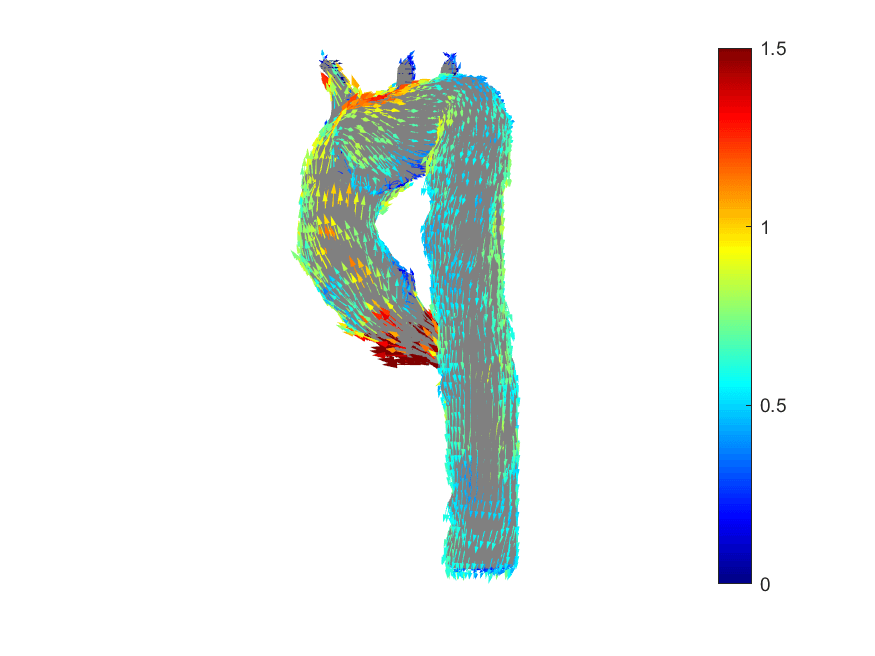
4D Flow magnitude and velocity data

The detector begins with volumetric magnitude images and velocity fields before orthogonal-flow projection.

Magnitude image and three velocity-component views from 4D Flow MRI data

Representative 4D Flow input data showing magnitude and velocity-component views.

Detector output

Localized tear plus structured flow readout

The flagship contribution is the transformation from imaging signal to standardized tear-level measurement.

Detector output showing localized tear and flow-time curve

Representative detector output showing localized tear geometry with corresponding flow readout.